

Why I Believe AI Photo-to-Video Is the Future of Real Estate Media
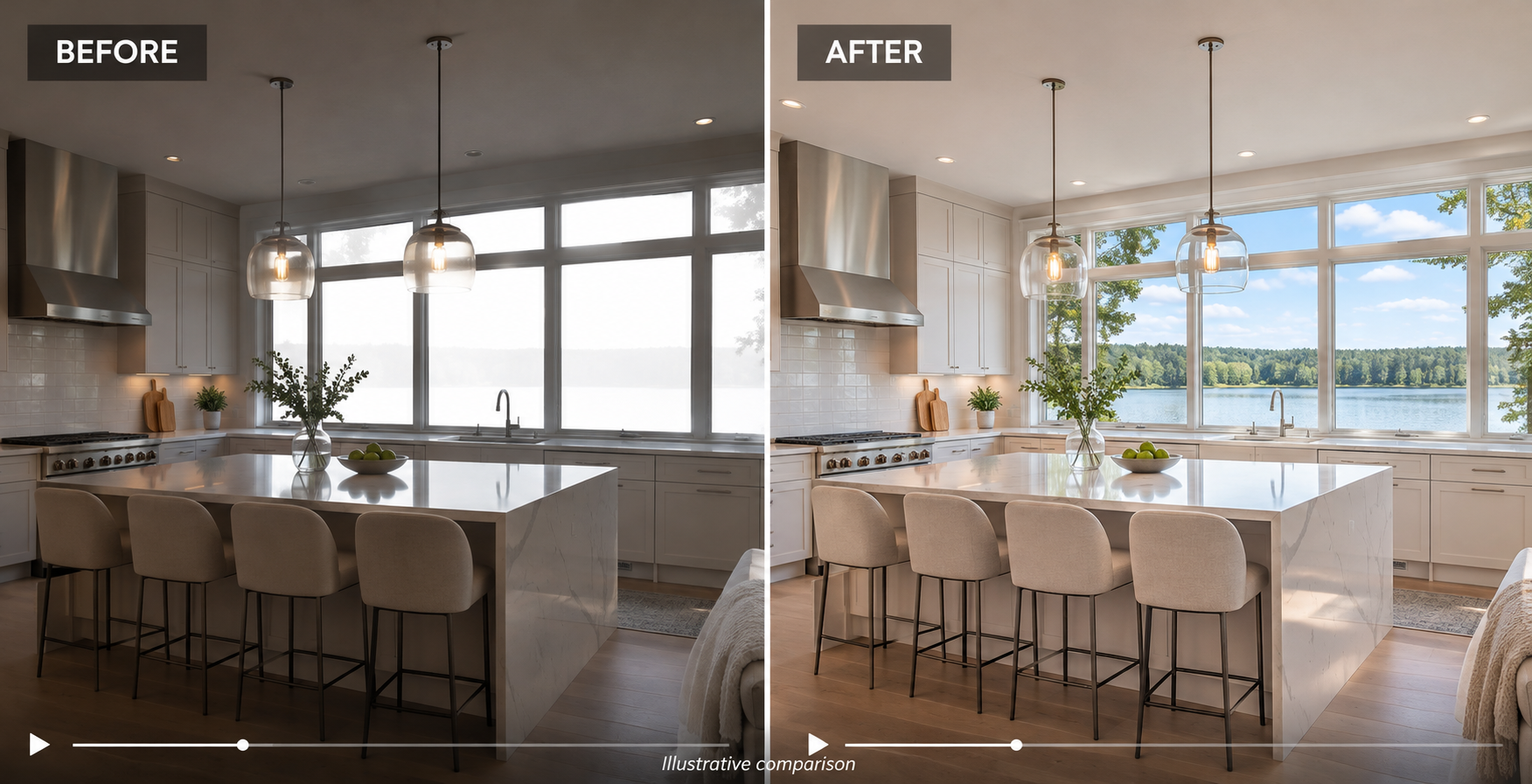
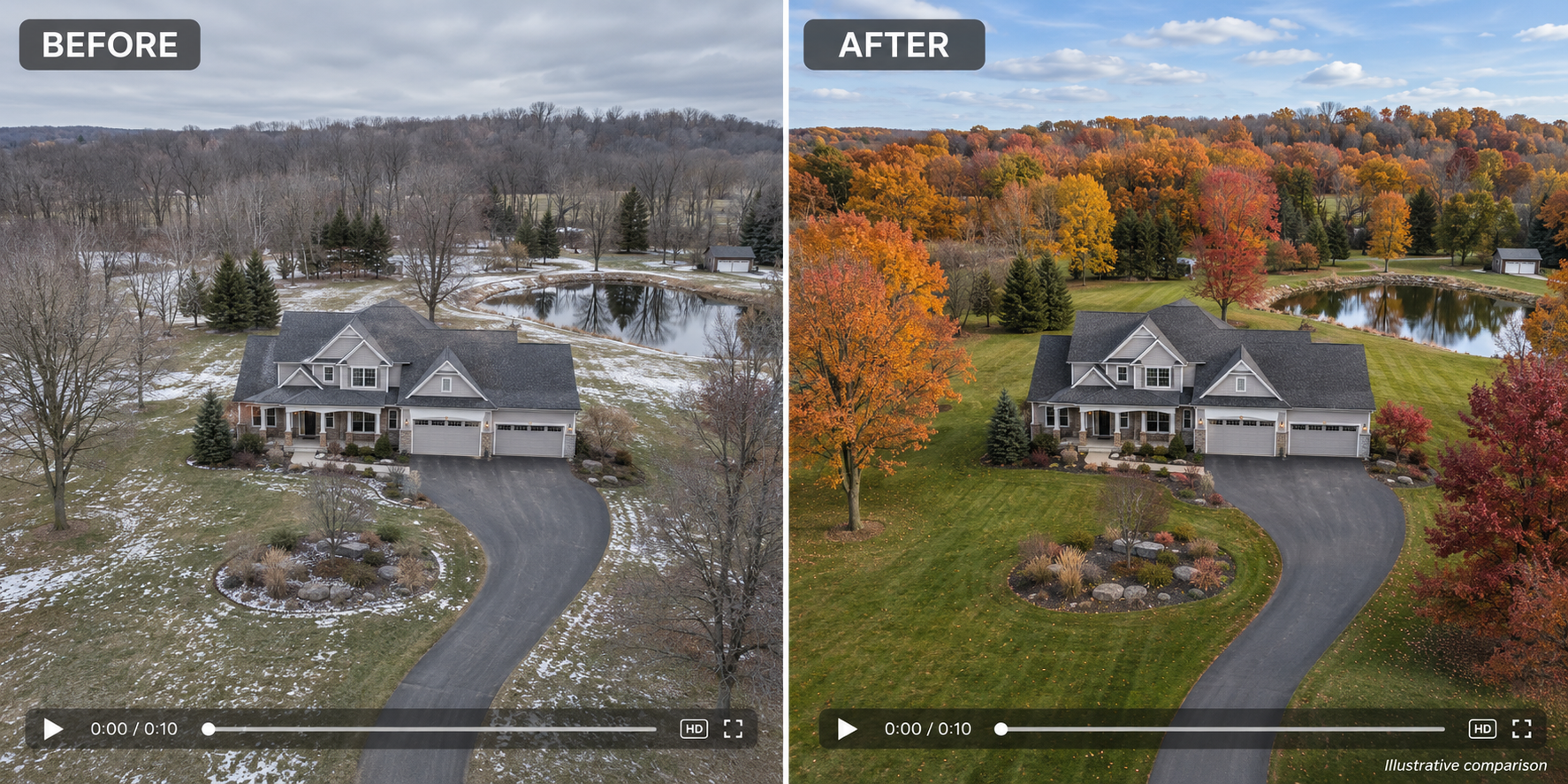
Banner and comparison images are AI-generated illustrations of optional visual treatments, not documentary photographs of a client listing.
Hear me out. I am not talking about changing the house. I am talking about changing how we show it.
No imaginary addition. No pool that does not exist. At its simplest, AI photo-to-video takes professional photographs of the real property and turns them into a beautifully paced moving presentation. The home is the subject; AI helps bring the photographs to life.
That is why I believe photo-to-video is the future of so much of the real estate media we create. We can show a home in its best light, literally and figuratively, without needing to redesign it to make an engaging video.
There are optional creative treatments too, including virtual staging, seasonal illustrations and renovation concepts. Those are separate, clearly disclosed choices, not the starting point or something every video needs. The foundation is much simpler: great photos, thoughtful movement and a compelling story about the property that is actually there.
Generated movement still needs professional review. We check the result against the source photographs, because AI can introduce mistakes even when no change to the property was intended.
The advantage starts before the movement
A great listing photo balances the light, frames the room and gives every detail a purpose. With a photo-first workflow, we can make those decisions before generating a moving clip.
We can refine exposure, keep colours consistent and make sure the scene is ready. Where appropriate, we can also introduce virtual staging to show how an empty room could be furnished. Then we build movement around the finished image.
That is a different starting point from filming a room exactly as it looks on the day of the shoot.
Turn a vacant room into a furnished video
A vacant home can be harder for buyers to picture furnished. With a photo-first workflow, we can virtually stage the photographs, then use those staged images to create video clips with the furniture in place.
That means a buyer can see a suggested living room arrangement, a furnished bedroom or a dining space in motion, rather than only viewing an empty room. The room itself remains the foundation; the furniture is a clearly disclosed illustration of how it could be used.
We review the resulting clips for consistency so the furniture and architectural details do not shift or distort as the view moves. It is another way to help buyers understand the space without physically furnishing the home for a separate video shoot.
Let buyers see through the windows
A room with a beautiful view should be able to show it.
Professional photography can balance a darker interior with bright windows, preserving both the room and the view outside. Starting with that finished image gives us a stronger foundation for carrying those details into the video.
Whether it is a garden, mature trees or water, the real view is part of the property’s story. We want buyers to see it clearly, rather than lose it in a wall of white light.
More control over the scene, season and time of day
This is where photo-to-video becomes especially interesting. We can shape the presentation of an individual image before adding motion.
- The scene: Refine the composition, tidy temporary distractions or use virtual staging to illustrate a room’s potential.
- The time of day: Create a twilight-style treatment from a daytime exterior, with an evening sky and a warmer mood.
- The season: Illustrate the existing property in a different season, such as a summer-style view of a home photographed in winter.
- The overall look: Balance light and colour across the selected photographs so the finished sequence feels cohesive.
With conventional video, the weather, light and surroundings at the time of filming influence every frame. Video can be edited too, but changing those elements across moving footage can be more involved. A photo-first approach gives us flexibility before motion enters the picture.
The real home, in its best light
What matters to me is that we are showing the home that actually exists. We are not adding a pool that is not there, building an imaginary addition or changing the structure to make the property something it is not.
We are showing it in its best light, literally and figuratively. A home photographed on a grey winter day can still have a beautiful summer story to tell. A carefully prepared seasonal treatment can illustrate its existing trees in leaf, its grounds without snow and the warmer light of a summer day, then carry that presentation into video.
That gives us a way to help buyers imagine the property at its seasonal best, even when the listing goes live in November or February. The house and its actual features remain the reference point.
These are illustrative seasonal views, not documentary photographs of the current conditions or a guarantee of exactly how the property will look in summer. We label seasonal and other material visual treatments appropriately, use reference imagery where available, and keep the original photographs available for context. We do not use an enhancement to conceal damage or invent landscaping, amenities or views.
There are limits. Heavy snow can hide the edges of a driveway, paths or other features. If we cannot establish what is actually there from the photographs or reliable reference images, we will not guess or generate a convincing-looking substitute. We leave that area as photographed or recommend another shoot when it is visible. Showing a home at its best should never mean making it up.
I have no interest in filling a listing with careless, generic AI imagery. The goal is thoughtful, professionally reviewed media that brings out the appeal of the real property.
Make your photography work harder
Your listing photos can do more than fill a gallery. Selected images can become a short social video, a sequence for a property website or a presentation that helps a seller understand your marketing approach.
We can plan the order, pacing and format around the story you want to tell. A vertical social clip and a wider property presentation can serve different purposes while drawing on the same photography.
It also creates an opportunity to add video-style content without arranging a separate filming visit for every use. The scope and source images still determine what is possible, but the flexibility is a real advantage.
Add detail shots and B-roll after the shoot
Sometimes the idea comes later. An agent sees the finished photographs and says, “Can we get a beautiful close-up of the coffee bar?” If that detail was not filmed during a conventional video shoot, getting a new camera angle may mean returning to the property.
With suitable source photographs, we can create a tighter composition and an AI-generated moving detail shot in post-production. A coffee nook, a fireplace or a distinctive finish can become supporting footage, often called B-roll, that helps tell the property’s story.
We can aim for the cinematic feel of a premium lens, with deliberate framing and a soft background, without claiming that the generated shot was actually filmed with that lens. It gives us more creative options after the appointment, provided the photographs contain enough real detail to support them.
The same accuracy standards apply. We do not invent a finish, appliance or feature that the source images cannot establish, and we check that the generated close-up stays faithful to what is there. Some requests will still need another photograph or a return visit.
A little more flexibility when life gets in the way
Sometimes a friendly cat wants to be in every shot. With conventional video, a pet repeatedly walking through the frame can mean waiting, filming another take or leaving a clip out. Removing it from moving footage can be a more involved edit.
With photographs, we have the opportunity to remove a pet or a temporary distraction, such as a dog bed or food dish accidentally left in the scene, before creating the video. That can keep an otherwise useful view in the finished presentation.
The home should still be prepared for photography, and not every removal is practical. We are talking about temporary, movable distractions, not removing fixed features or hiding the property’s condition.
A shorter appointment, less disruption
When the finished video is being created from photographs, we do not need to capture a separate set of video footage at the property. That can substantially shorten the on-site appointment compared with a combined photo-and-video shoot.
For agents, sellers and anyone living in the home, that can mean less time keeping the property empty and presentation-ready, and less disruption to the day. The actual time saved depends on the size of the home and the services booked, but removing a separate video capture session is a practical benefit of the photo-first approach.
Professional photography and editing still matter
AI does not make good photography less important. It makes the starting image even more important.
Composition, lighting and attention to detail give us the foundation. Careful editing and review turn individual clips into a finished presentation. Generated movement can introduce errors around windows, reflections, furniture and architectural details, so those elements need to be checked rather than assumed correct.
On-site video still has its place, particularly for agent introductions, genuine activity and showing how spaces connect. But for bringing selected property views to life with greater control over their presentation, I see photo-to-video becoming a central part of real estate marketing.
A new direction for listing media
What excites me is the combination: strong photography, more creative flexibility and another way to tell a property’s story. We can make thoughtful decisions about the images first, then use motion to give those decisions a different kind of impact.
That is why I believe photo-to-video is the way forward for so much of the listing content we create.
Want to see how AI photo-to-video could fit your next listing? Email us at info@wylieford.com and let’s talk about the possibilities.